How to Get Referred Into a Top AI Startup Without Applying
Build visible work and relationships before roles open so someone already knows to refer you.

Getting referred into a top AI startup without applying means making your work visible to people who can vouch for it. The cold-application funnel is functionally broken at these companies, so a stronger résumé is not the main fix. The better approach is to build evidence and relationships before a role opens, so someone already knows why you belong in the conversation.
Why cold applications fail specifically at top AI startups
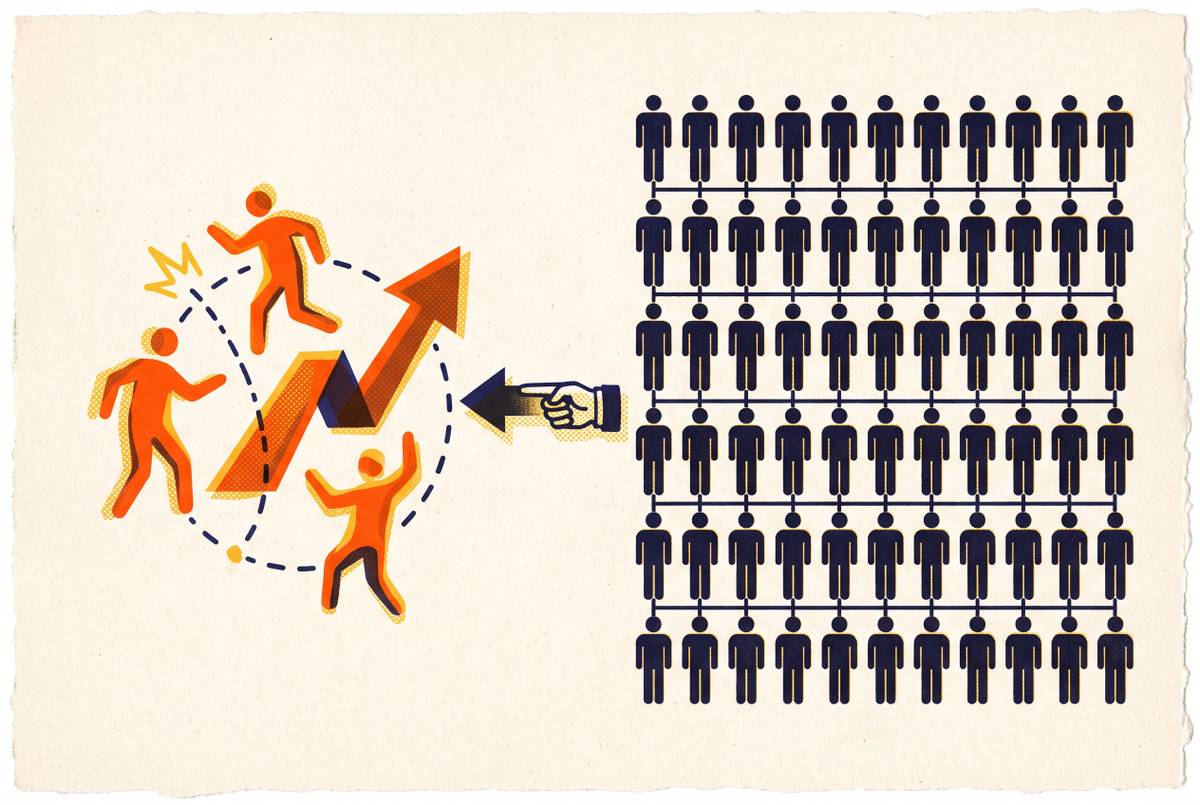
Standout (YC P2026) describes today’s hiring market as a two-sided spam problem. Engineers use AI to apply to hundreds of jobs, while founders and recruiters send hundreds of AI-generated messages to reach the same talent. As more messages pour in, it gets harder to tell a serious match from another automated message. That makes the problem structural rather than something a better hiring market will simply clear up.
At top AI startups, the people making hiring decisions route around that noise by going to their networks first. For founding-engineer roles especially, founders reach out directly to people they know from past work and often post a role only as a last resort. The application page therefore shows only part of the hiring process. For an engineer, the practical problem is not just standing out in the queue, but reaching the people who are looking before they need that queue.
Why referrals convert so differently — and what that means for where to spend your time
Referrals convert at a much higher rate than cold applications and are far more likely to advance to interviews. A referral attaches someone else’s reputation to an introduction. This transfer of trust leaves the hiring team with less uncertainty to resolve because a person it already trusts has done the first filter.
That transfer matters even more as the role becomes more senior. Prior work networks account for the majority of founding-engineer placements, so broad hiring averages conceal how heavily these roles depend on referrals. Someone who has watched you ship can explain why you would work well in a small team. An application can state the same qualities, but it cannot carry that person’s judgment.
Cold applications still fill the majority of seats in aggregate, which is the strongest objection to a referral-first search. But total hires do not tell you which channel gives you the best chance for each hour invested. Volume channels help people find roles, while trust channels help turn that first look into a serious conversation. Becoming the person someone remembers when a role opens is therefore a more useful goal than submitting another slightly better application.
How AI startup referral networks actually form — the three trust mechanisms
The first mechanism is prior work network trust. Former colleagues who have watched you ship can speak specifically about how you work. This is often the strongest referral and the hardest to manufacture during a job search. It carries weight because of work done years earlier, when neither person may have been thinking of an introduction down the road. How you work with your current team is therefore already part of your next search.
The second mechanism is meeting the same people again and again at small, technical events. AI Tinkerers’ New York City chapter runs hands-on meetups with live demos and real systems or code. Showing up often gives other builders more chances to get to know your work, so a referral later feels less forced. Cerebral Valley serves a similar connective role in the San Francisco AI scene through gatherings of founders, investors, media, and other AI leaders. Geography remains a real constraint because the strongest AI referral networks are concentrated in San Francisco, although remote-first companies widen the pool of possible employers.
The third mechanism is a public artifact that gives someone a concrete reason to introduce you. An open-source project, a published teardown, or a blog post with deep technical insight can show that someone can do the specific hard thing a company needs done. GitHub’s 2025 Octoverse report showed a big year-over-year rise in new AI projects, so more engineers can be found through their work on the platform. But presence alone is not the point. The artifact needs to reveal ability that a potential referrer can explain to someone else.
Targeting the right network for the role you actually want
These mechanisms only help if they reach people connected to the job you want. A product-focused AI engineer has good reason to go to builder-demo events such as AI Tinkerers, where people talk about working systems. A research engineer has more reason to invest in university seminar series and open-source ML communities, where hiring teams can understand a contribution history. A founding engineer’s best route is usually through people who worked at the same companies. The right habits in the wrong community can still waste months.
The distinction between research engineering and research science also matters when choosing where to invest. Research Engineer roles are more numerous at Series A/B AI startups and have higher acceptance rates than Research Scientist positions at frontier labs, where acceptance rates are vanishingly small. Most AI startups that are growing need a research engineer rather than a pure research scientist, unless research itself is the main product. Targeting the more relevant community is therefore not just a matter of changing the title on a profile. It means putting your work where the people who need that kind of contribution can see it.
Smaller, AI-focused groups can produce more relevant conversations than broad professional networks because their members share a clearer set of problems. The filter is whether the people in the room would hire or refer someone for your specific role. If they would not, attendance is not advancing the referral goal.
How to reach potential referrers in a way that actually works
Spend time with the company’s actual product and find one thing that is broken, missing, or underused. Then build or document a response that shows relevant judgment. The message now has something stronger than enthusiasm behind it. It gives the recipient evidence that you have already done some version of the work the company needs.
Write four sentences covering what you noticed, what you built or documented in response, and one low-friction ask. The résumé attachment and the long personal introduction can be left out. Broad praise gives the person reading it nothing to judge, while a specific thing you noticed gives them a reason to read on. This is not about charm. When hiring at an early stage, teams mainly want to be more sure of someone, and work that helps them does some of that before the hiring process starts.
Ashby’s 2026 startup report identifies French startup Amo as an example of a company relying heavily on personalized sourcing outreach. The people who get your message may already judge outreach the same way, by how closely it fits their work and how specific it is. Do not follow up more than once without adding new value, and do not message twenty people at the same company. Broad, low-quality outreach recreates the cold-application problem in a different inbox. Find one person doing the job you want and the founder, which gives you two names.
What the process looks like once a referral gets you in the door
A referral gets you considered, but it does not replace preparation. The first conversation is usually with a founder or an early team member. Expect the discussion to center on what you have shipped, why you want to leave stability for risk, and whether you understand early-stage startup work. The person making the introduction has reduced the team’s uncertainty enough to start talking. Your answers now have to support that introduction.
Standard FAANG preparation is not a reliable guide to what comes next. Algorithmic interview loops can select for the wrong candidates at this stage, so grinding algorithmic coding exercises prepares you for a different exam. An increasingly common exercise is an “eval harness,” in which you design how to measure whether an AI feature actually helps users. Plausible output is not enough. The exercise tests whether someone has both deep technical skills and the product judgment to tell if a feature works.
Once a referral gets you a meeting, try to talk to a founder soon instead of assuming you need to go through every stage of the usual hiring pipeline. That does not mean recruiters have no role in a fast process. Ashby’s 2026 startup report found that involving recruiters earlier cut time to hire by nearly a third at the smallest stages. Removing delay takes priority over following a particular sequence of people. Strong candidates leave slow processes, so speed constrains hiring.
How curated talent marketplaces fit into a referral-first job search
A curated talent marketplace gives engineers another way in when they have work that shows what they can do but do not know the right people. It places a trusted intermediary between the engineer and the startup without requiring years of personal relationship-building. The distinction from a job board is the direction of discovery. A job board surfaces a role to an engineer, while a curated marketplace surfaces an engineer to a role. That makes the model closer to a referral than to another application channel.
Standout (YC P2026) describes a model in which talent and companies each have an autonomous agent that represents them, vets the other side, and makes introductions only when that vetting establishes a fit. Talent stays anonymous until they agree to an introduction. The model illustrates how matching services can bypass an overloaded inbound funnel.
Features to look for include upfront salary bids before interviews begin, speed built into the service, and a focus on AI startups and high-growth tech companies. Those features address whether an introduction can lead to a process worth your time. A marketplace accelerates access for engineers who already have a track record, public work, or both. Without that signal, a curated introduction has the same limit as a personal referral you cannot back up.
Building the conditions for referrals before you need them
Engineers who get referred before a role is posted have often sustained this approach between job searches, building relationships earlier and keeping their work visible. Maintain a GitHub presence with real projects. Publish technical writing that shows specific judgment rather than generic tutorials, and return to the one or two events that matter for your role. Consistency gives people more than a brief burst of job-search activity to remember.
Your current workplace is part of that effort because the colleagues who may vouch for you in three years are watching you work now. How you show up can build or erode the reputation that a future introduction will draw on. Public work makes your ability discoverable, but shared work gives people a deeper basis for trusting it. Neither carries more weight just because you suddenly need a job.
For someone starting from little network presence, the smallest useful move is enough to begin. One real public project, one event attended with genuine engagement, or one specific message can create the basis for the next conversation. Each artifact and interaction makes later contact easier because there is already something to recognize and assess. That is the compounding advantage of a reputation over AI-generated application spam, but it requires an initial piece of evidence. Start with one public project that shows you can do the specific hard thing your target company needs done.